Hakeem Olajuwon
The Dream Shake and two titles. Hakeem Olajuwon came from Lagos, took up basketball at 17 and became the NBA's career blocks leader, a two-time champion and master of the Dream Shake.
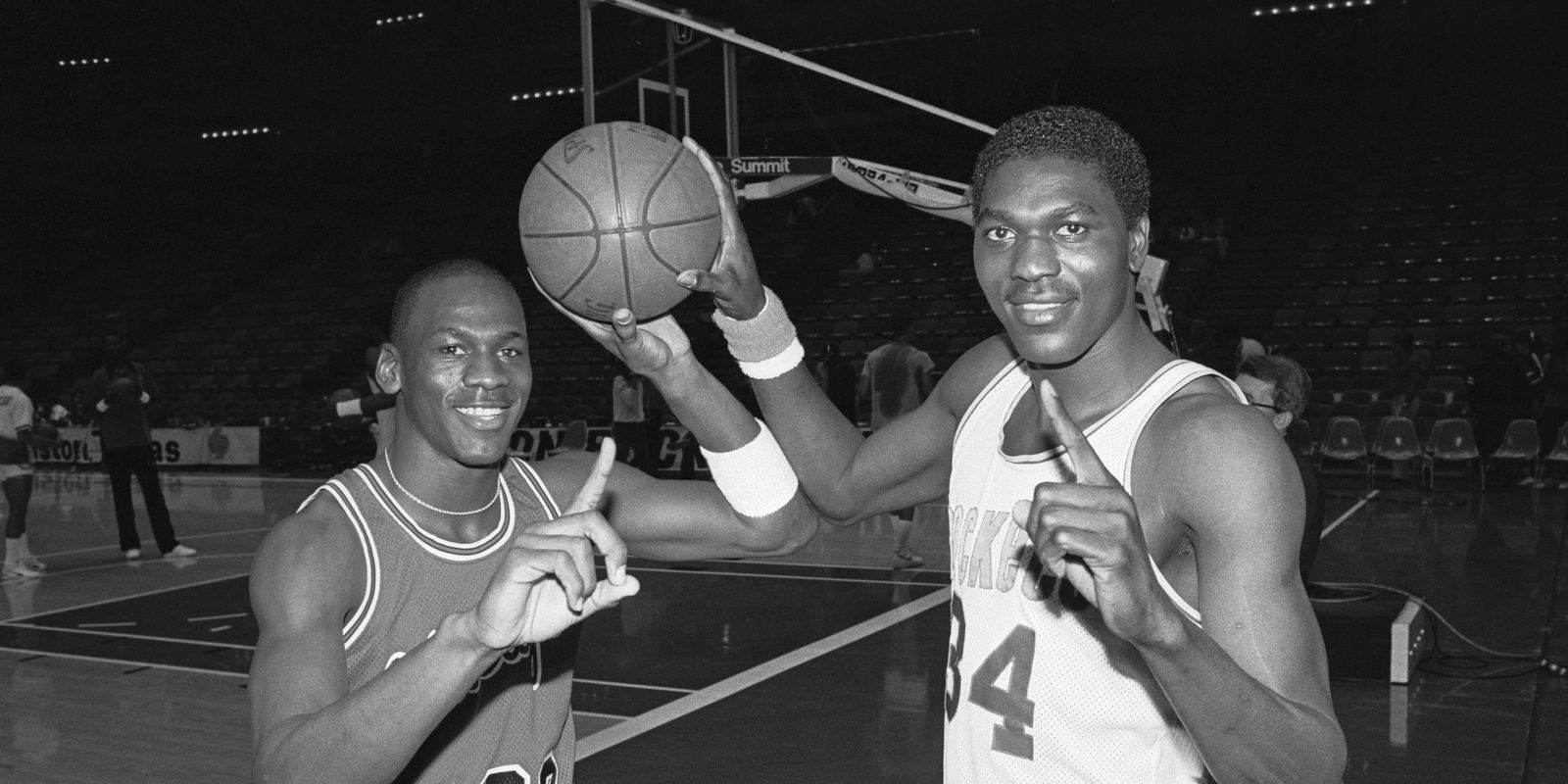
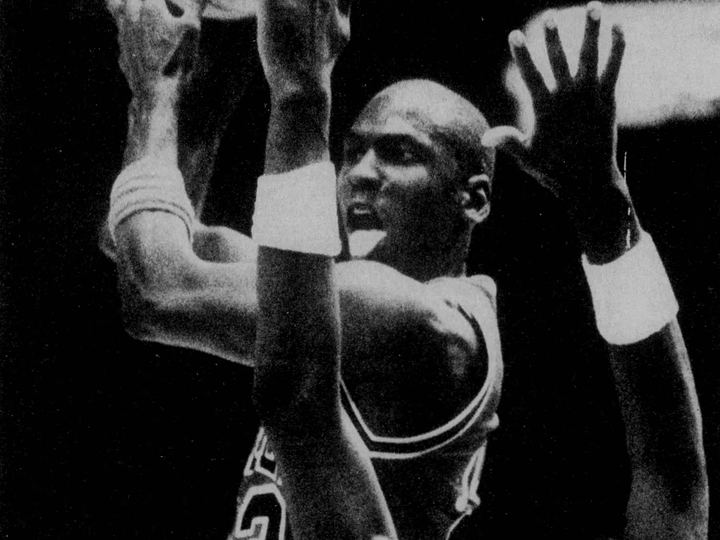
Hakeem with Michael Jordan: United Press International, Public domain
From soccer goal to the paint
Hakeem Olajuwon grew up in Lagos, Nigeria, playing soccer, often as a goalkeeper, and handball. He did not start playing basketball until he was about 17. That soccer footwork would later become the most feared post game in the league.
He came to the University of Houston, where the high-flying Phi Slama Jama teams reached three straight Final Fours. In 1984 the Rockets picked him first overall, one spot ahead of Portland's choice and two ahead of Michael Jordan.
His parents ran a cement business in Lagos, and he arrived in Houston in 1980 still learning the finer points of the game. Coach Guy Lewis and daily practices against teammates such as Clyde Drexler sped up his learning.
The Dream Shake
Olajuwon's signature move was a series of fakes, spins and pivots that left defenders guessing which way he would go. Fans called it the Dream Shake, after his nickname, The Dream. Big men still study tape of it today, and many modern stars have trained with him in the offseason.
On defense he was just as special. He retired with 3,830 blocked shots, the most since the league began tracking blocks in 1973-74, and he is one of the few players with an official quadruple-double, including blocks.
Back to back in Houston
In 1993-94, Olajuwon won MVP, Defensive Player of the Year and Finals MVP in the same season, the first player to sweep all three. The Rockets beat the Knicks in seven games for the title.
The next year Houston, a sixth seed, won it all again and swept Shaquille O'Neal's Orlando in the Finals. Hakeem was Finals MVP again. He became a U.S. citizen in 1993 and won Olympic gold in 1996.
In the 1995 playoffs he outplayed a string of star centers, including that season's MVP, David Robinson, in the Western Conference finals, a series still studied for his footwork.
A sneaker statement
In the late 1990s, with signature shoes selling for well over 100 dollars, Olajuwon backed a Spalding signature shoe priced at about 35 dollars. He said he wanted kids to be able to afford the shoe of a star.
He entered the Hall of Fame in 2008. For Fly Baller, he is a reminder that footwork can be learned, and that a late start does not have to mean a small career.
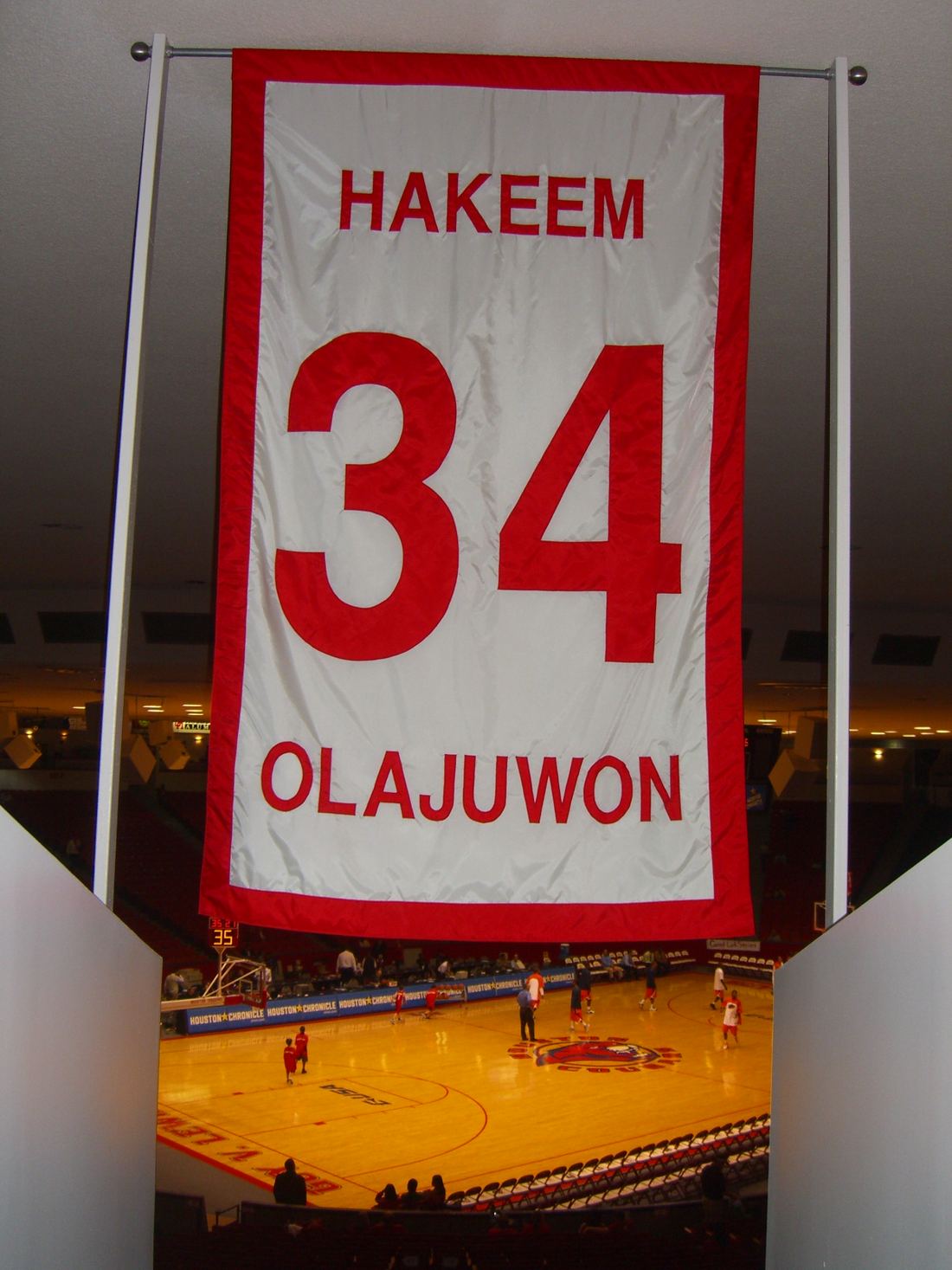
He spent 17 seasons with Houston, which retired his number 34, and a final season in Toronto.
- Hakeem with Michael Jordan: United Press International, Public domain
- Number 34 at Houston: Nick Juhasz, CC BY 2.5
Text written by Fly Baller.